10 Warning Signs of Mold Toxicity
Mold is a common problem in many homes, especially in areas with high humidity and frequent moisture issues.
While small amounts of mold may not affect everyone, some people can experience health problems after prolonged exposure. Recognizing the 10 warning signs of mold toxicity can help homeowners identify possible mold-related issues early and take action before the problem becomes worse.
If you notice ongoing symptoms that improve when you leave your home and return when you come back, indoor mold exposure may be something to investigate.
What “Mold Toxicity” Actually Means
You’ll see the term “mold toxicity” used loosely online. It’s important to understand what it does and doesn’t mean.
Medical organizations like the CDC and Cleveland Clinic recognize mold allergy as a real, testable condition. Mold spores trigger your immune system. This causes classic allergy symptoms.
“Mold toxicity” is a broader, less precise term. It’s often used to describe symptoms like fatigue, brain fog, and joint pain in people who live in damp buildings.
The connection between mold and these broader symptoms is studied but not fully settled. Some clinics market extensive mycotoxin testing and detox programs. Many of these tests lack strong clinical validation.
10 Warning Signs of Mold Toxicity
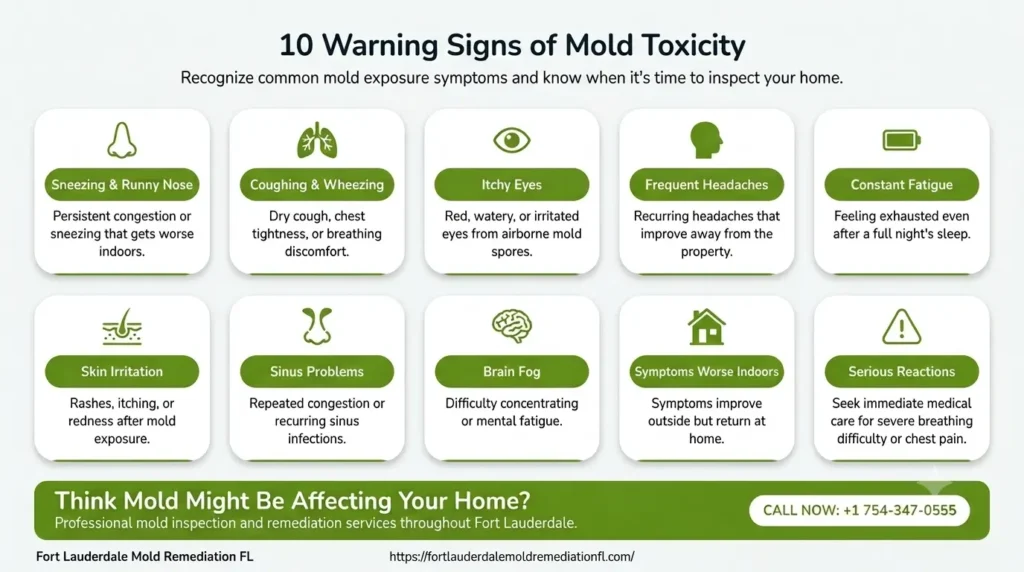
Mold exposure can affect people differently depending on their health, the type of mold, and how long they’ve been exposed. Below are 10 warning signs that may indicate mold-related health issues.
1. Constant Sneezing, Runny Nose, or Nasal Congestion
This is the most common and best-documented mold symptom. Mold spores trigger your immune system the same way pollen does.
Your body releases histamine. This causes sneezing, a stuffy or runny nose, and post-nasal drip.
The key clue is timing. If congestion improves when you leave home and returns when you go back, indoor mold is worth investigating.
2. Coughing, Wheezing, or Shortness of Breath
Mold exposure can irritate your airways directly, even without a diagnosed allergy. This is especially true for people with asthma.
If you have asthma, mold exposure can trigger more frequent attacks. You may notice you’re reaching for your inhaler more often at home than elsewhere.
Chest tightness or a dry cough that lingers for weeks, especially indoors, is a signal worth taking seriously.
3. Red, Itchy, or Watery Eyes
Eye irritation is a classic allergic response to mold spores in the air. It often shows up alongside sneezing and congestion.
Some people also notice itchy or irritated skin around the eyes. This tends to improve quickly once mold exposure stops.
4. Persistent Headaches
Headaches are one of the more debated symptoms. Some research links damp indoor environments to headaches. The exact mechanism isn’t fully proven.
Still, many people report headaches that ease up once they’re away from a moldy building. If your headaches follow a pattern tied to a specific room or building, it’s worth noting for your doctor.
5. Fatigue That Doesn’t Improve With Rest
Ongoing tiredness is commonly reported by people in damp, moldy homes. This symptom is harder to pin to mold specifically since so many things cause fatigue.
It becomes more meaningful when it appears alongside respiratory symptoms and improves after time away from the property.
6. Skin Rashes or Irritation
Direct contact with mold-contaminated surfaces, or airborne mold particles, can cause skin irritation in sensitive individuals.
This usually shows up as redness, itching, or mild rash on exposed skin. It’s generally not severe and improves once exposure stops.
7. Frequent Sinus Infections
Chronic sinus inflammation from ongoing mold exposure can make you more prone to sinus infections. This differs from a single cold. It’s a pattern of repeated infections.
If you’re treating sinus infections every few months and haven’t addressed your home’s moisture levels, that connection is worth exploring with your doctor.
8. Difficulty Concentrating or “Brain Fog”
This symptom gets discussed heavily in wellness and functional medicine circles. The research connecting indoor dampness to cognitive symptoms exists, but it’s less established than the respiratory and allergy links.
People describe trouble focusing, forgetfulness, or a general mental fogginess that clears up away from the affected building.
We mention this honestly: it’s a real complaint people report, but it’s not something a mold inspection alone can diagnose or confirm as mold-caused.
9. Worsening Symptoms Specifically Indoors
This is less a standalone symptom and more a pattern to watch for across everything above. If congestion, coughing, headaches, or fatigue consistently get worse at home and better elsewhere, indoor air quality deserves a closer look.
This pattern is one of the most useful clues you have, because it points directly at your environment rather than a general illness.
10. Signs of a More Serious Reaction (Rare)
For most healthy people, mold exposure causes irritation and allergy symptoms, not severe illness. Serious reactions are uncommon and usually involve people with weakened immune systems, chronic lung disease, or significant, prolonged exposure.
Seek medical care right away if you experience:
High fever with respiratory symptoms
Chest pain or real difficulty breathing
Confusion or fainting
Swelling, hives, or signs of a severe allergic reaction
These situations need a doctor, not a home remedy.
Who Is Most Affected by Mold Exposure
Symptoms tend to be worse for:
If you fall into one of these groups, take early signs of mold more seriously and act sooner.
Need Professional Mold Remediation?
Suspect mold in your Fort Lauderdale home? Contact our experts today for inspection and no-obligation estimate.
What To Do If You Recognize These Signs
Common Black Mold Symptoms You Should Know
Black mold is one type of mold that receives a lot of attention because certain species can produce substances called mycotoxins. Exposure reactions can vary depending on the individual and the amount of exposure.
Common black mold symptoms may include:
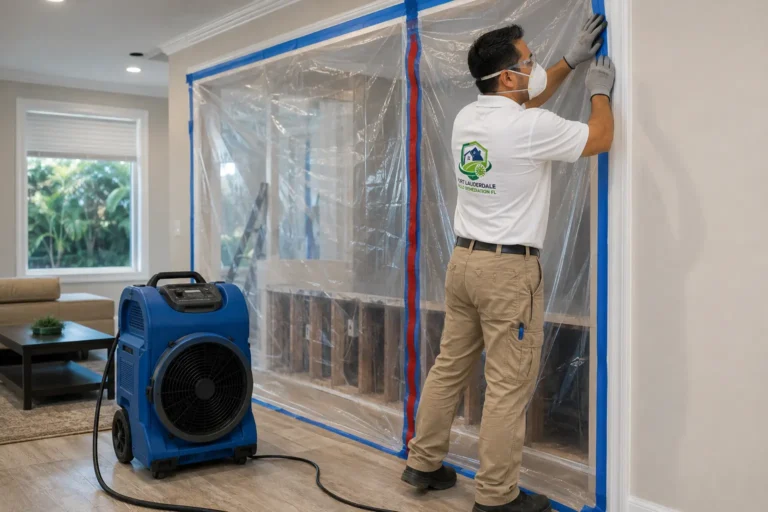
If you suspect black mold in your home, it is important to address the moisture source first. Mold growth usually continues when water problems are not corrected.
Can Mold Exposure Cause Chest Pain?
Some people ask, “Can mold cause chest pain?”
Mold exposure may contribute to breathing irritation or worsen asthma symptoms in sensitive individuals, which can sometimes feel like chest discomfort or tightness.
However, chest pain can have many different causes. If you experience severe or ongoing chest pain, it is important to seek medical advice.
What Causes Mold Growth Inside Homes?
Mold needs moisture, oxygen, and a food source to grow. Common causes of indoor mold include:
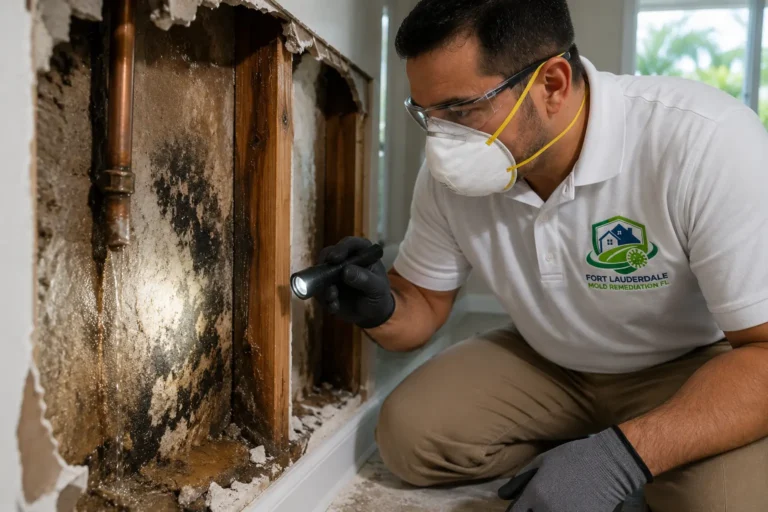
In humid areas like Fort Lauderdale, controlling moisture is one of the most important steps in preventing mold problems.
What To Do If You Notice Mold Warning Signs
If you notice possible symptoms of mold exposure, consider these steps:
1. Look for Visible Mold
Check areas where moisture is common:
2. Fix Moisture Problems
Removing mold without fixing the moisture source often leads to the problem returning. Address:
3. Consider Professional Mold Inspection
A professional inspection can help identify hidden mold problems that may not be visible.
Experts can check areas such as:
Frequently Asked Questions
Final Thoughts
Knowing the 10 warning signs of mold toxicity can help homeowners recognize possible problems early. Symptoms like coughing, sinus issues, fatigue, headaches, skin irritation, and breathing problems may be signs that your indoor environment needs attention.
If you suspect mold in your Fort Lauderdale home, the first step is identifying where the moisture problem is coming from. A professional mold inspection can help determine the right solution and protect your home’s indoor air quality.
Worried About Mold?
Our Fort Lauderdale mold remediation specialists are ready to help. Schedule your free estimate today.